





16.04.2025 – CONSTITUTION OF PUNJAB PPAC
16.06.2025 – CONSTITUION OF KPK PPAC
11.08.2024 – CONSTITUTION OF GB PPAC
Archives
Quick Links
Useful Links
- Supreme Court of Pakistan
- Online Catalouge | IIUI
- Major newspapers in the world
- Major libraries
- Online journals
- Bookstores
- IIUI, Islamabad.
- Employees Welfare
- marfat.com
- rekhta.org/ebooks
- maktabah.org
- kitabosunnat.com
- iqbalcyberlibrary.net
- toobaa-elibrary.blogspot.de
- minhajbooks.com
- elmedeen.com
- Islamqa.info
National Paigham-e-Aman Committee
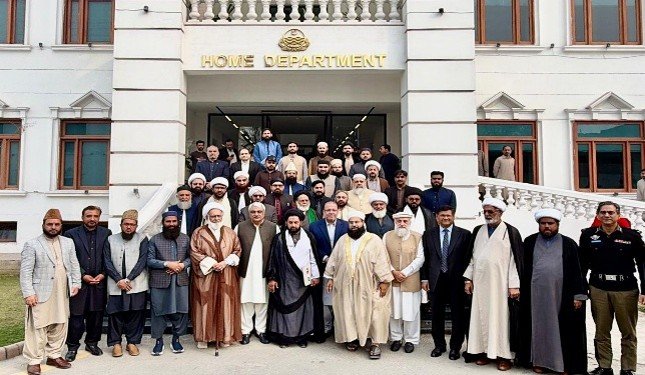
The National Paigham-e-Aman Advisory Committee envisions a Pakistan united by shared values of peace, mutual respect and constitutional equality, resilient against extremist ideologies and sectarian division.
NPAC – Role and Functions
NPAC provides a platform for:
- Promoting interfaith dialogue and mutual understanding.
- Building consensus among religious leadership.
- Addressing extremism, sectarian violence and hate speech.
- Preventing radicalized and sectarian conflicts.
- Strengthening social cohesion and resilience against divisive rhetoric.
- Supporting a coordinated, whole-of-country approach through engagement with Provincial and Regional Paigham-e-Aman Committees.
NPAC – Provincial and Regional Outreach
To ensure that the national vision is translated into local realities, Provincial and Regional Paigham-e-Aman Committees (PPACs/RPACs) serve as corresponding outreach and coordination mechanisms.
PPACs have been notified for Punjab, Sindh, Khyber Pakhtunkhwa and Balochistan, while RPACs have been notified for AJK and Gilgit-Baltistan. These committees contextualize the national narrative according to local religious, social and security dynamics and provide ground assessments, sensitivities and recommendations to NPAC.
NPAC – Composition
The National Paigham-e-Aman Committee (NPAC) comprises 21 members representing religious leaders from different sects and minority communities across Pakistan. The Committee brings together religious leadership to promote interfaith dialogue, consensus-building and social cohesion while addressing extremism, sectarian violence and hate speech.